Signal & Flow
What do AI and semiconductor headlines mean for your investments?
We read U.S. AI growth companies alongside Korean memory leaders. Separate company earnings from growth and liquidity, then identify the next numbers worth checking.
Research Board

AI Revenue Is Growing. Why Does GPU-Backed Credit Still Feel Fragile?
A weekly look at revenue definitions, GPU-backed credit and cash recovery.

How Amazon Turns AI into Earnings: From AWS to Shopping, Advertising and Delivery
Amazon sells AI through AWS and uses it across shopping, advertising and fulfillment. Recent results reveal how that strategy can lift earnings—and w…

AI Investment Keeps Growing. Who Gets Paid?
A weekly look at AI demand, cash recovery, and the constraints between investment and revenue.

Google’s Next AI Growth Engine: Making Good Models Part of Everyday Work
Google is developing frontier models alongside tools and user experience. Recent papers and releases show possible routes from search, work software…

Tesla at $354.11: What Growth Does an EPS-Based DCF Require?
Tesla’s share price reflects expectations beyond its current earnings. An interest-rate-linked, EPS-based DCF helps frame the gap—and the evidence Ro…
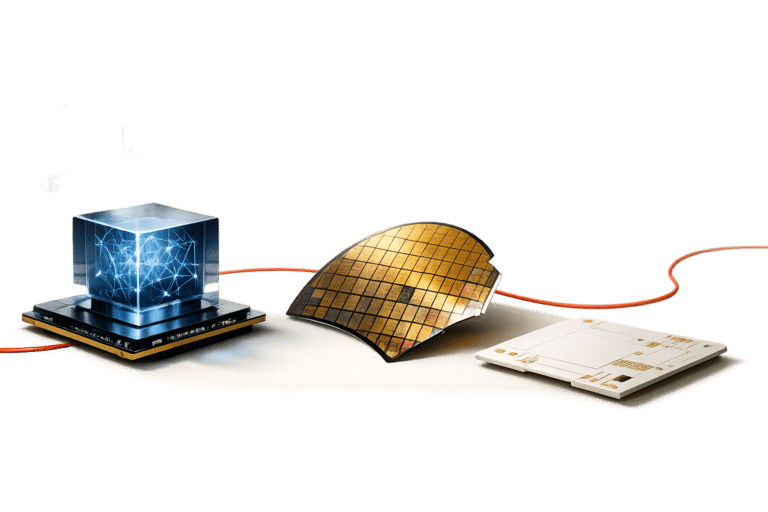
Where Is AI Spending Turning Into Revenue?
AI monetization is arriving at different speeds across chips, cloud platforms, and enterprise software. Current official results show where the cash…

After Tesla Became a SpaceX Shareholder, the Numbers That Matter
Tesla’s $2 billion investment is now a SpaceX stake. The question is no longer whether the companies merge, but at what relative value and after what…
Why AI Companies Are Building FDE Teams: Palantir, ServiceNow, and the Valuation Test
A Growth × Liquidity read on enterprise AI FDE teams, Palantir, ServiceNow, workflow software, and the valuation test for agentic AI.

When Can LONGi Rebound? China Solar Is Not Dead, but Shareholders Need Discipline
A Growth × Liquidity read on LONGi, China’s solar overcapacity, policy-led consolidation, module-price repair, and the timing conditions for a durabl…

When Can NVIDIA and GPUs Lead the Market Again?
A Growth × Liquidity look at NVIDIA, Blackwell, Vera Rubin, valuation, and the conditions for GPUs to regain market leadership.
Why Apple Is Looking at CXMT: China’s Memory Buildout
Apple’s reported request for U.S. clearance to buy from CXMT shows how China’s memory buildout is moving into global supply-chain bargaining.

Gundlach and Zulauf on the Shift: Late-Cycle AI Capex and Liquidity Cracks
A Signal & Flow reading of the DoubleLine Gundlach–Zulauf conversation through AI capex, the dollar, long rates, private credit, and Growth × Liquidi…
AI Agents Do Not Kill Enterprise Software. They Reprice the Control Layer.
ServiceNow and Palantir look less like SaaS victims and more like control-layer beneficiaries of enterprise AI agents. But business beneficiaries and…
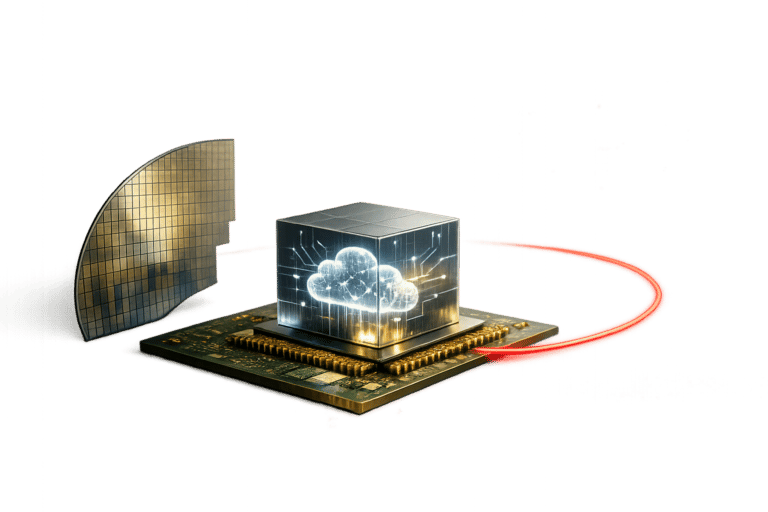
Microsoft’s Real AI Bet: When Models Get Cheap, Azure and Copilot Become the Rails
A Growth × Liquidity read on why model commoditization can make Azure, Copilot, enterprise data, and workflow control the scarcer layer.
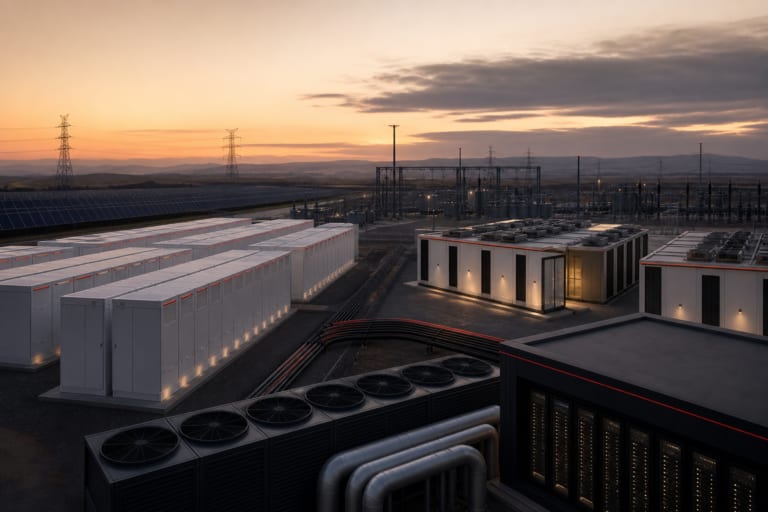
Tesla Megapod: The AI Cloud Bottleneck Is Power
A Growth × Liquidity interpretation of Tesla’s MEGAPOD trademark, Megapack demand from AI data centers, and the shift from GPU ownership to power-awa…

The 2026 U.S. Housing Reset: Inventory, Flat Prices, and the Mortgage-Rate Channel
A Growth × Liquidity reading of the 2026 U.S. housing reset: more inventory, flat national prices, mortgage-rate frictions, builder buydowns, and reg…

The Day Tesla Turns On Robotaxi: When the Car Becomes an AI Platform
A Signal & Flow interpretation of Cern Basher’s Tesla Robotaxi discussion: Cybercab, FSD, Optimus, AI agents, SpaceX infrastructure, and Growth × Liq…

Google, CXMT, and the Next AI Bottleneck: Memory
A Growth × Liquidity read on the rumor that Google may evaluate DRAM procurement from China’s CXMT, and what it says about memory as the next AI infr…

Anthropic Fable 5 Export Controls: Does the AI Boom End, or Change Shape?
The U.S. restriction on Anthropic Fable 5 and Mythos 5 signals a shift from free-market AI SaaS toward national-security infrastructure. We map the i…

From AGI to ASI: DeepMind’s Superintelligence Map and the AI Value-Chain Winners
A SignalnFlow read on Google DeepMind’s arXiv report ‘From AGI to ASI’: how AGI-to-ASI pathways reprice compute, memory, networking, power, cloud, ag…

Tesla’s AI Science: What FSD Shows About Vision-to-Control Intelligence
The technical meaning of Tesla FSD is not merely that a car can drive itself. It is that a neural system is turning high-dimensional vision into long…

AI State Control Begins at Model Access: How Frontier Restrictions Reprice the Value Chain
Anthropic’s Fable 5 and Mythos 5 access suspension shows how frontier AI is moving from software product to strategic infrastructure governed by acce…

Will AI Data-Center Capex Repeat the Railroad and Fiber Bubbles?
A Growth × Liquidity essay comparing AI data-center capex with the railroad, fiber, DRAM, and solar manufacturing cycles.

When Does AI Capex Become Stock Upside? The Hyperscaler ROI Digestion Phase
Why hyperscaler stocks can stay range-bound despite strong earnings, and how to distinguish healthy AI-capex digestion from destructive demand cuts.

Korea’s July 2026 Property-Tax Reform: The Realistic Order of Holding-Tax and Transaction-Tax Changes
A Growth × Liquidity scenario map for Korea’s expected July 2026 property-tax reform: assessment ratios, long-term capital-gains deductions, holding…

Why the Fed Looks Past Food and Energy When Reading Inflation
A plain-English Signal & Flow explanation of the latest FRED Blog post on core PCE: why the Fed looks past food and energy, and what that means for g…

The AI Bottleneck Is Moving From GPUs to Usable Compute Capacity
The next AI infrastructure bottleneck is not explained by GPU ownership alone. Power, grid connection, cooling, land, permitting, and data-center exe…

How Big Tech Can Recover the Cost of AI Infrastructure
AI infrastructure capex is not only a cost line. This article maps how hyperscalers can recover it through contracts, premium compute, inference volu…

AI CapEx Sustainability, Liquidity, and Housing Transmission Risk: The Reality of the 2026 Growth Axis
AI capex is the core 2026 growth axis, but its transmission through power, credit, rates, and housing liquidity also creates warning signals.
SpaceX IPO Roadshow: From Launch Provider to Space, Connectivity, and AI Infrastructure Platform
A Signal & Flow summary of the SpaceX IPO roadshow: offering terms, Starship, Starlink, xAI/Grok, orbital AI compute, financials, and investor checkp…

Why Tesla FSD Is Physical AI: From Rules to End-to-End Driving and Back to Control
A Signal & Flow interpretation of Tesla FSD through Jensen Huang’s AI roadmap: perception, generative behavior, agentic control, and physical AI.

Broadcom Q2 FY2026 Earnings: AI Infrastructure Does Not End With GPUs
A Growth × Liquidity read on Broadcom Q2 FY2026: AI semiconductors, custom ASICs, AI networking, VMware cash flow, and valuation discipline.

What Frontier AI Labs Sell When Edge AI Becomes Ubiquitous
As NVIDIA Spark, Microsoft MAI-Thinking-1, and local open models spread, frontier labs move from selling generic LLM calls toward AI labor operating…

America’s 2026 AI Executive Order: Innovation, Cybersecurity, and Frontier Models
The White House’s 2026 AI innovation and security order reads less like a brake on AI and more like a plan to absorb frontier models into cyber defen…

NVIDIA Alpamayo and Tesla FSD: How Far Has the Robotaxi World-Model Race Come?
A Growth × Liquidity comparison of NVIDIA Alpamayo and Tesla FSD: world models, occupancy, end-to-end driving, data flywheels, and platform economics.
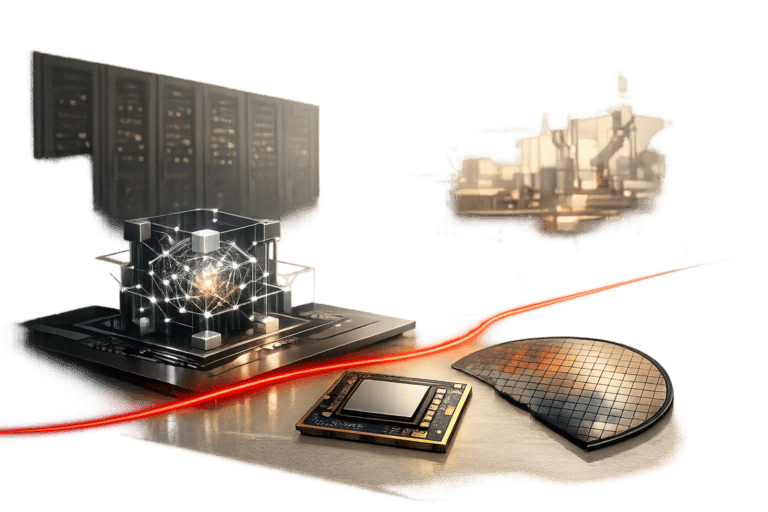
Computex 2026: How NVIDIA RTX Spark and N1X Differ From Apple M5
A Signal & Flow visual brief on Computex 2026, NVIDIA RTX Spark/N1X versus Apple M5, and bottleneck beneficiaries across AI PCs and AI factories.

AI Concentration and Liquidity Divergence: How to Read the Mid-2026 Market
By mid-2026, markets are balancing AI-led growth, possible liquidity relief, and increasingly concentrated returns across the AI infrastructure compl…

Korea Housing After the June 3 Local Election: When Taxes and Liquidity Tighten Together
A Growth × Liquidity read on Korea housing after the June 3 local election: possible property-tax reform, tighter financing conditions, and why a lon…

MSCI U.S. Rebalance: Why Large-Cap Weight Adjustments Matter More Than the Additions List
A public-market read on the May 2026 MSCI U.S. rebalance: additions, deletions, large-cap weight-adjustment pressure, same-day returns, volume, and t…

NVIDIA, Arm, Microsoft and the ‘New PC Era’: How AI Could Move From Cloud to the Device
A Signal & Flow read on the Microsoft and NVIDIA ‘new era of PC’ teaser: AI PCs, Windows on Arm, local inference, and potential beneficiaries.
When Can Hyperscalers Rise Again? AI CapEx, Token Economics, and the Conditions for Re-Rating
A Growth × Liquidity checklist for when Microsoft, Amazon, Alphabet, and Oracle can re-rate beyond AI capex concerns.

What Would Make Tesla Rise Again? A Robotaxi, FSD, and Optimus Checklist
A practical checklist of the operating conditions that could make Tesla rise again: Robotaxi, FSD, Cybercab, Optimus, EV demand, and liquidity.

AI CapEx as a Macro Variable: The New Growth and Liquidity Path
AI capex is no longer only a company-level spending plan. It is becoming a macro force that links data centers, power, chips, interest rates, and fun…

SpaceX–Tesla Merger Talk: What the IPO Changes for Shareholders
Tesla’s robotaxi, Cybercab, and Semi options are compared with SpaceX’s AI-compute and Starlink upside over the next two years. No proposal exists. T…

Why U.S. Housing Is Not Crashing, Yet Still Feels Frozen
The U.S. housing story is less about a price crash and more about a liquidity reset: more inventory, 6.5% mortgage rates, and elevated price-to-rent…
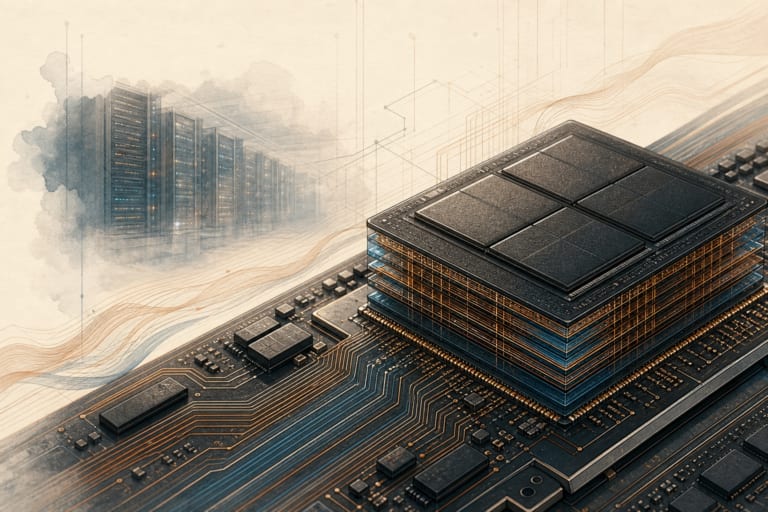
Huawei’s Ultra-Capacity SSD: The Breakthrough Is Packaging, Not Better NAND
Huawei’s 61.44TB and 122.88TB SSDs point to a packaging-led workaround for AI storage capacity under semiconductor restrictions.

ACE China STAR50 ETF: Investing in China’s AI-Semiconductor Localization Theme
ACE China STAR50 is not just a broad China-growth ETF. Its largest holdings give investors concentrated exposure to China’s AI chips, server CPUs, se…

Why Expensive Growth Stocks Can Stall: Tesla, Palantir and 13 High-Valuation U.S. Narratives
A Growth × Liquidity comparison of Tesla, Palantir, Snowflake, Shopify, Cloudflare and other high-valuation U.S. growth narratives, with moat notes,…
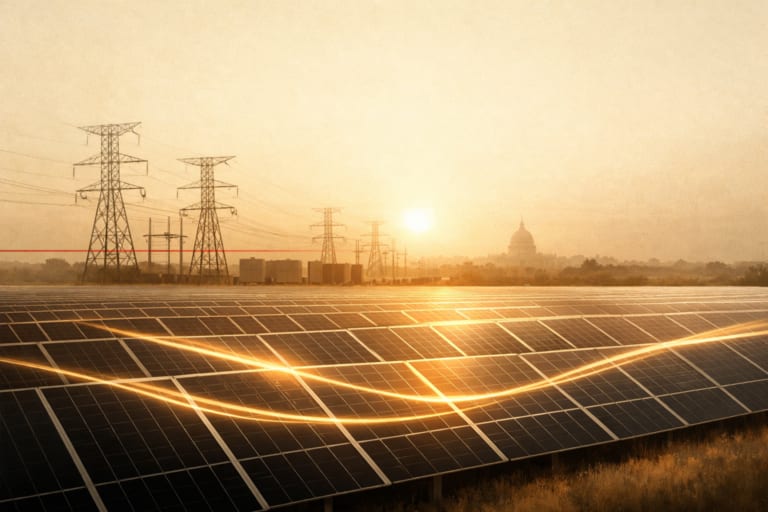
If U.S. Solar Gets a Policy Rebound: A Stock Map for the Next Turn
A Growth × Liquidity map for a possible U.S. solar-policy rebound, separating durable beneficiaries from high-beta turnaround trades and oversupply-s…

China’s Memory Catch-Up: How Dangerous Is It for Samsung and SK Hynix?
A Growth × Liquidity reading of China’s memory catch-up, Samsung/SK hynix HBM roadmaps, and when the threat becomes cycle pressure versus direct disp…

Inside HUMN: Which Humanoid Robotics Stocks Have Real Moats—and Which Are Already Hot
A constituent-level deep dive into HUMN’s humanoid robotics holdings, separating robot platforms, reducers and motors, AI brains, sensors, automation…
After CXMT, Is the Memory Supercycle Over?
CXMT is a real DRAM variable, but the near-term pressure is likely in commodity DRAM before it reaches the HBM bottleneck.
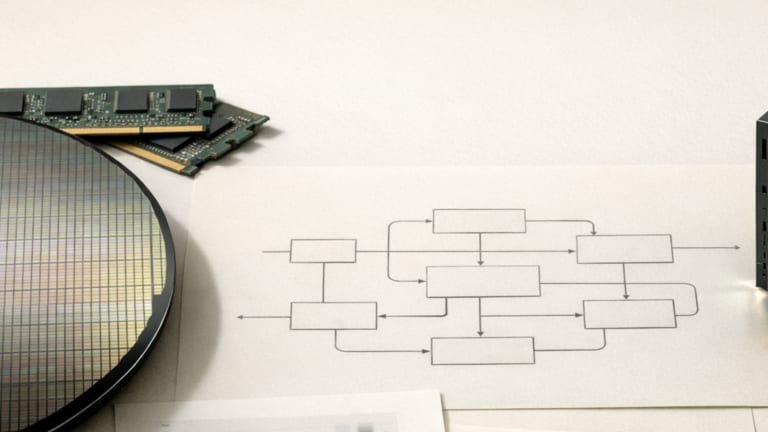
SaaS Follow-Up: AI-Agent Repricing
The rebound in software shares after mid-May does not prove that the “SaaS apocalypse” fear has disappeared. It shows something more precise: the mar…
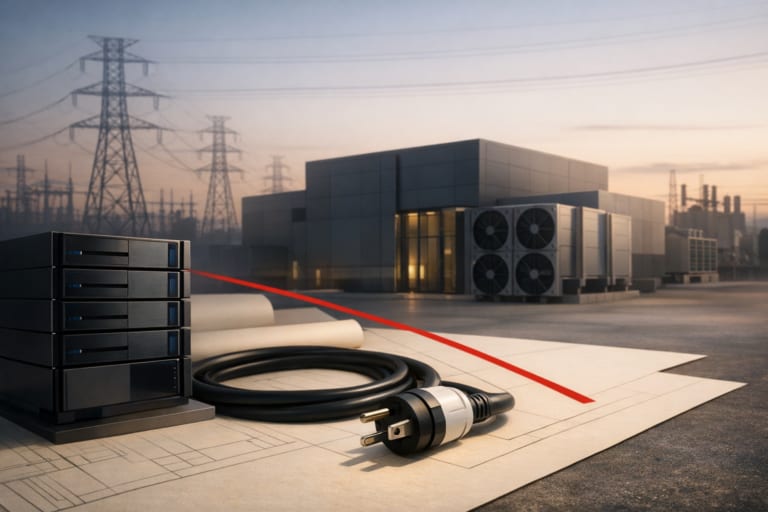
The Next AI Winner May Be the One That Secures Power First
AI is becoming a physical-infrastructure story: why power grids, transmission, and data-center siting now gate AI growth.

Is AI CapEx Becoming Shareholder Value? From Infrastructure Bottlenecks to Value Capture
AI CapEx is a powerful Growth signal, but investors must verify whether it becomes recurring revenue, free cash flow, and pricing power.

Why Investors Prefer Stories Over Statistics: A Narrative-to-Numbers Checklist
Good investing can begin with a compelling story, but portfolio inclusion must pass numbers, price, and invalidation rules.

Korea’s Property Market Speaks Through Supply First: Subscriptions, Auctions, and Regional Signals
Korea’s property market should be read through subscriptions, auctions, transactions, jeonse, and supply before headline prices.

NVIDIA and Google Cloud Show the Next AI Battleground: Developer Ecosystems
AI infrastructure competition is moving beyond GPU supply into cloud instances, models, developer workflows, and deployment ecosystems.

When Risk Appetite Returns: New Highs, the Won, and Korea’s Volatility
Risk appetite can be constructive, but new-high areas, currency pressure, and Korean equity volatility call for a liquidity-first checklist.
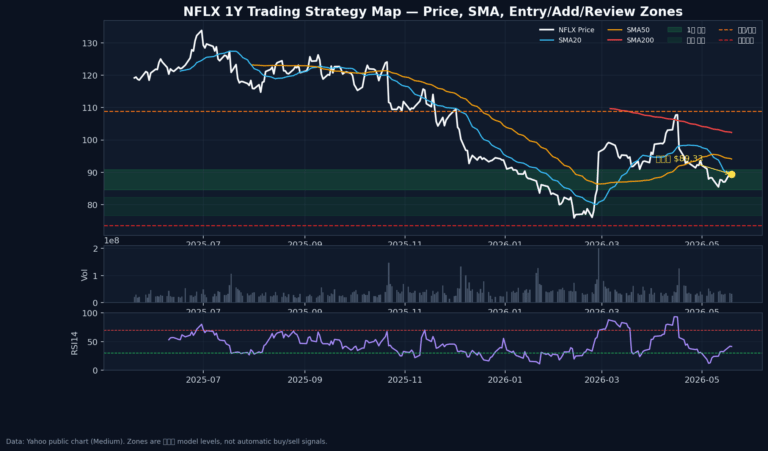
Reading Netflix Again: Separate Moat, Price, and Timing
A reader-facing Signal & Flow brief on Netflix, separating moat, valuation, and timing.
Costco (COST): A Membership Moat With a Valuation Discipline Problem
A Pyeongantu company report on Costco: strong membership moat, premium valuation, and why price discipline matters before new entry.

When AI Demand Exceeds Supply, Revenue Growth Can Still Slow
A Signal & Flow reading of Seagate’s factory-capacity comments and what they reveal about AI infrastructure bottlenecks.

When Markets Hit New Highs: Five Checks Before Chasing Risk
A Growth × Liquidity checklist for separating constructive risk appetite from late-cycle chasing near market highs.

The Next AI Infrastructure Bottleneck Is Tokens per Watt
Why the AI infrastructure KPI is shifting from GPU count to tokens per watt across racks, power, networking, cooling, and software.

A Seven-Line Routine for Beating FOMO at Market Highs
A seven-line routine for reducing FOMO mistakes around market highs: price, size, evidence, alternative, review, time horizon, and emotion.

Cerebras IPO and the AI Inference Bottleneck: Chip Company or Infrastructure Company?
A Signal & Flow AI industry analysis of Cerebras, inference bottlenecks, customer concentration, and Growth × Liquidity.

Why Reinforcement Learning Infrastructure Is Becoming the Next AI Bottleneck
Why reinforcement-learning infrastructure, simulation, compute fabric, networking, and power become more important as AI agents and Physical AI scale.

Reading NVIDIA’s Proxy for the AI Infrastructure Thesis: Blackwell, Rubin, and H20 Risk
A formal Signal & Flow reading of NVIDIA’s DEF 14A as an AI infrastructure thesis document: Blackwell, Rubin, data-center growth, and H20 export-cont…
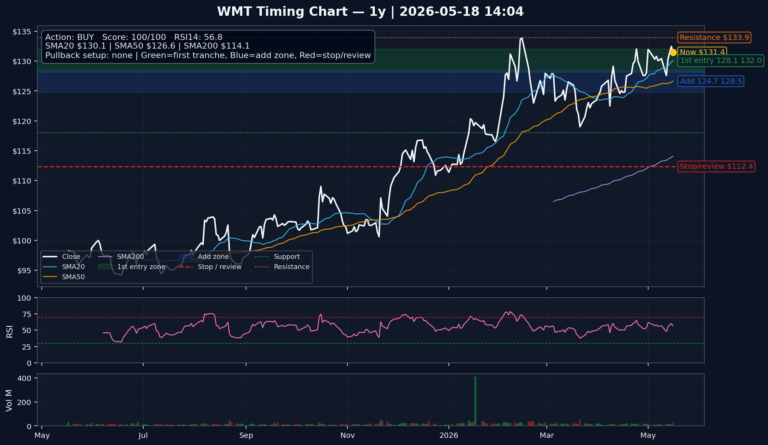
Walmart (WMT): A Strong Defensive Consumer Platform, But Price Still Matters
Walmart is a high-quality defensive consumer platform. Its grocery frequency, logistics network, advertising layer, marketplace, and membership optio…
Jamsil Els: Read Transaction and Jeonse Liquidity Before Price
A real-assets report on Jamsil Els using official transaction data: location quality, sale and jeonse liquidity, and entry conditions.

What ServiceNow’s $4 Billion Notes Offering Says About the Cost of Enterprise AI
ServiceNow’s $4 billion notes offering is a reminder that enterprise AI software growth must be read together with capital cost and balance-sheet fle…

The Four Abilities of a Good Investor — Staying Sane During Earnings Season
A good investor needs interest, probabilistic thinking, market history, and emotional discipline. Earnings season is where those abilities become beh…

Near Highs, Rising Volatility: When Liquidity Matters More Than Growth
When indices trade near highs, investors should check liquidity quality, volatility, rates, breadth, and earnings revisions before chasing the growth…

Raemian One Bailey: Read Liquidity Before Price in Prime Banpo
A real-assets report on Raemian One Bailey through transaction depth, jeonse gap, and financing conditions.
The SpaceX IPO Debate: What Public-Market Investors Should Watch When Great Companies Stay Private
When great growth companies stay private longer, public-market investors need to separate access, proxy exposure, valuation and liquidity before chas…

Why Mortgage Rate Data Differ: A Liquidity Checklist for Real Estate Investors
For real-estate liquidity, the definition, collection method, lag and transaction relevance of rate data matter more than one headline number.

AI Infrastructure Is Moving Beyond GPUs: Reinforcement Learning, Power, and Token Costs
The next AI infrastructure contest is not just more GPUs; it is better learning loops, power access, lower token cost and capital recovery.
SaaS Apocalypse: AI Agents Are Re-Ranking Software Winners
If AI agents replace human clicks and seat-based workflows, not all SaaS dies. Thin UI layers compress, while data, permissions, security, workflow s…
After Nvidia: The Answer Is Outside the GPU Bottleneck
The next AI winners are less likely to be a single Nvidia replacement and more likely to be companies solving bottlenecks outside the GPU.

Cerebras IPO: Semiconductor Momentum Is a Tailwind, but Price Discipline Still Matters
A Cerebras IPO valuation-map note: semiconductor momentum is supportive, but the first-entry zone should remain disciplined.

Karpathy’s Software 3.0: SaaS Compression and the Agent-Native Infrastructure Layer
A long-form adaptation of the original Karpathy Software 3.0 note: the shift is larger than AI coding. Programming moves from code to context, while…

Redrawing the AI CapEx Cycle: From Chips to Power, Networking, and ROI
A deeper map of the AI capex cycle from chips to power, networking, memory, cooling, data centers, and customer ROI.

How Not to Abandon Cash in a Rally: A FOMO-Control Playbook
A behavioral playbook for preserving cash optionality when market highs, peer returns, and a lower VIX intensify FOMO.

The Next AI Infrastructure Bottleneck Is Networking, Not Just GPUs
Why AI infrastructure is moving from a standalone GPU race to a full-stack systems race across networking, memory, power, cooling, and data-center op…

Jensen Huang’s Next AI Roadmap: A Physical AI Beneficiary Map Beyond Robot Stocks
GPT repriced GPUs and agent AI repriced server bottlenecks. Physical AI shifts the map toward simulation, sensing, control, edge inference, power, an…
How Commercial Is Isomorphic Labs? From AlphaFold Narrative to Pharma Economics
A deeper staged read of Isomorphic Labs: technology validation, paid pharma partnerships, funding, clinical translation, business-model paths, Alphab…

Market Signals From the May 10 WSJ Popular List, Reframed by Signal & Flow
A Growth × Liquidity reading of ten popular WSJ stories across AI capex, labor, investing tools, housing stress, and commodity bottlenecks.
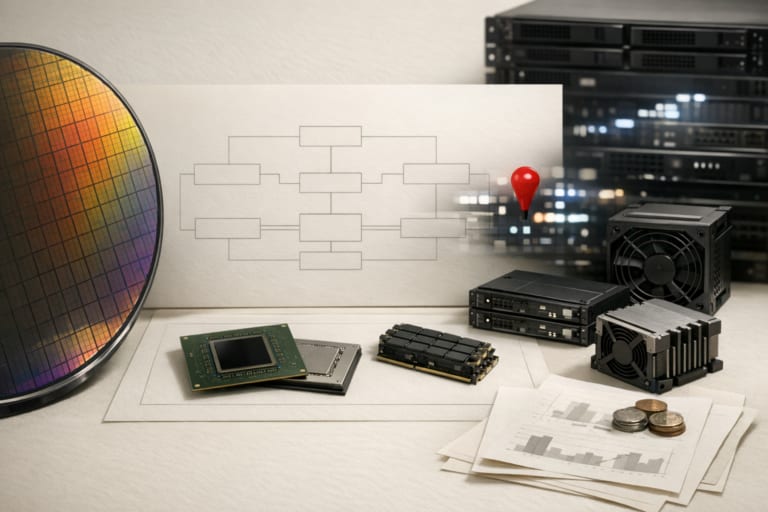
Who Makes Money in the AI Value Chain: The Moat Is Control of the Bottleneck, Not the GPU
The long-term AI value-chain winners are the companies that control bottlenecks and convert them into recurring revenue and high margins.

Where 2026 H2 Liquidity Could Come From: Bessent’s Bank-Regulation Reset and the Warsh Fed Rate-Cut Option
The key 2026 H2 market variable may not be rate cuts alone, but whether bank lending capacity and Fed rate-cut expectations open at the same time.

Memory-Led Semiconductor Risk-On: Conditions Before Chasing
A Growth × Liquidity reading of a session where semiconductors, Micron, Sandisk, and Korea exposure all strengthened together.
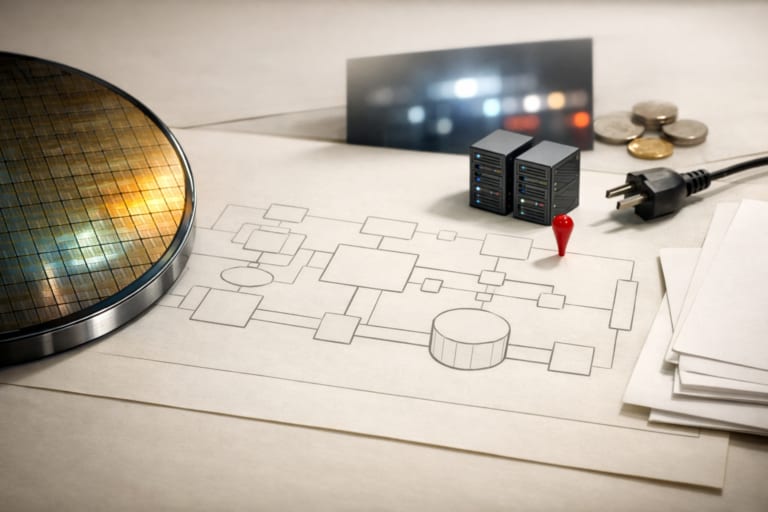
AI Value-Chain Rotation: Where Leadership Can Broaden Next
Conditions and risks for AI leadership broadening from GPUs into memory, networking, power, cloud, and software.
AI Inference Economics: Watch Usage and Unit Cost Before Model Headlines
A checklist for prioritizing repeat usage, inference unit cost, customer willingness to pay, and margin conversion over model headlines.

Demis Hassabis and AI for Science: Turning Scientific Automation into an Investment Map
Read DeepMind, AlphaFold, world models, and AI for Science as long-duration investment evidence.

Jensen Huang’s AI Factory: Reading Tokens per Watt as an Investment Signal
How to translate Jensen Huang’s co-design, AI factory, and tokens-per-watt frame into investment questions.

AI Infrastructure CAPEX: Where Bottlenecks Become Profit Pools
A practical map for reading GPU, HBM, networking, data-center, power, and capex bottlenecks as investment evidence.

The 24-Hour Rule After a Risk Signal: Five Checks Before Selling or Adding
The first response after a risk signal should not be selling or adding. Use a 24-hour pause to classify the signal, check exposure, and decide whethe…

Why Real-Asset Investors Should Watch Transactions, Rates, and FX Before Prices
A Signal & Flow real-assets framework: watch transaction volume, financing cost, FX, and income fundamentals before treating price moves as a cycle t…

Today’s GL Position: What AI Chip Highs and a 4.36% 10-Year Yield Are Telling Us
A Growth × Liquidity market note on AI semiconductor strength, elevated yields, the U.S. dollar, and why investors should confirm conditions before c…

Why Real Estate Investors Should Watch Transaction Volume Before Price
Why transaction volume, listings, rental conditions, and financing costs often matter before headline property prices.

How Rate-Cut Expectations Really Move the Stock Market
How rate-cut expectations move equities through liquidity, earnings, credit conditions, and sector breadth.

Report Automation and the Human Approval Boundary
A public-safe boundary for automating research reports without outsourcing accountability.

A Weekly Market Review Routine for Individual Investors
A practical weekly review routine for Growth × Liquidity, leadership, warning signals, and non-actions.

The Growth × Liquidity Framework: A Practical Way to Read Markets
A practical framework for reading markets through growth momentum, liquidity conditions, leadership, and invalidation rules.
Dashboards for reading the market
Check the published market reading before opening an analysis. Growth and liquidity, AI spending, yields and credit each answer a different question.
Is the market leaning on earnings growth or easier funding?
The GL monitor separates growth from rates and funding conditions. Check the date and evidence of the last published seven-indicator reading on the monitor itself.
Open the GL regime monitor →Is AI spending turning into growth?
Compare hyperscaler capital spending with the growth that follows. Investment alone cannot prove a return.
Open the AI spending dashboard →Where should you start reading?
Choose a question, read its feature analysis, and follow a related case.
Where is Big Tech AI spending paying off?
Compare chip, cloud and software payback.
Start reading →Related case →When does China’s memory buildout affect Korean suppliers?
Read commodity memory and HBM qualification on separate timelines.
Start reading →Related case →What changed when stock prices moved?
Separate earnings expectations from rates and funding.
Start reading →Related case →